
Gochujang Caramelized Salmon
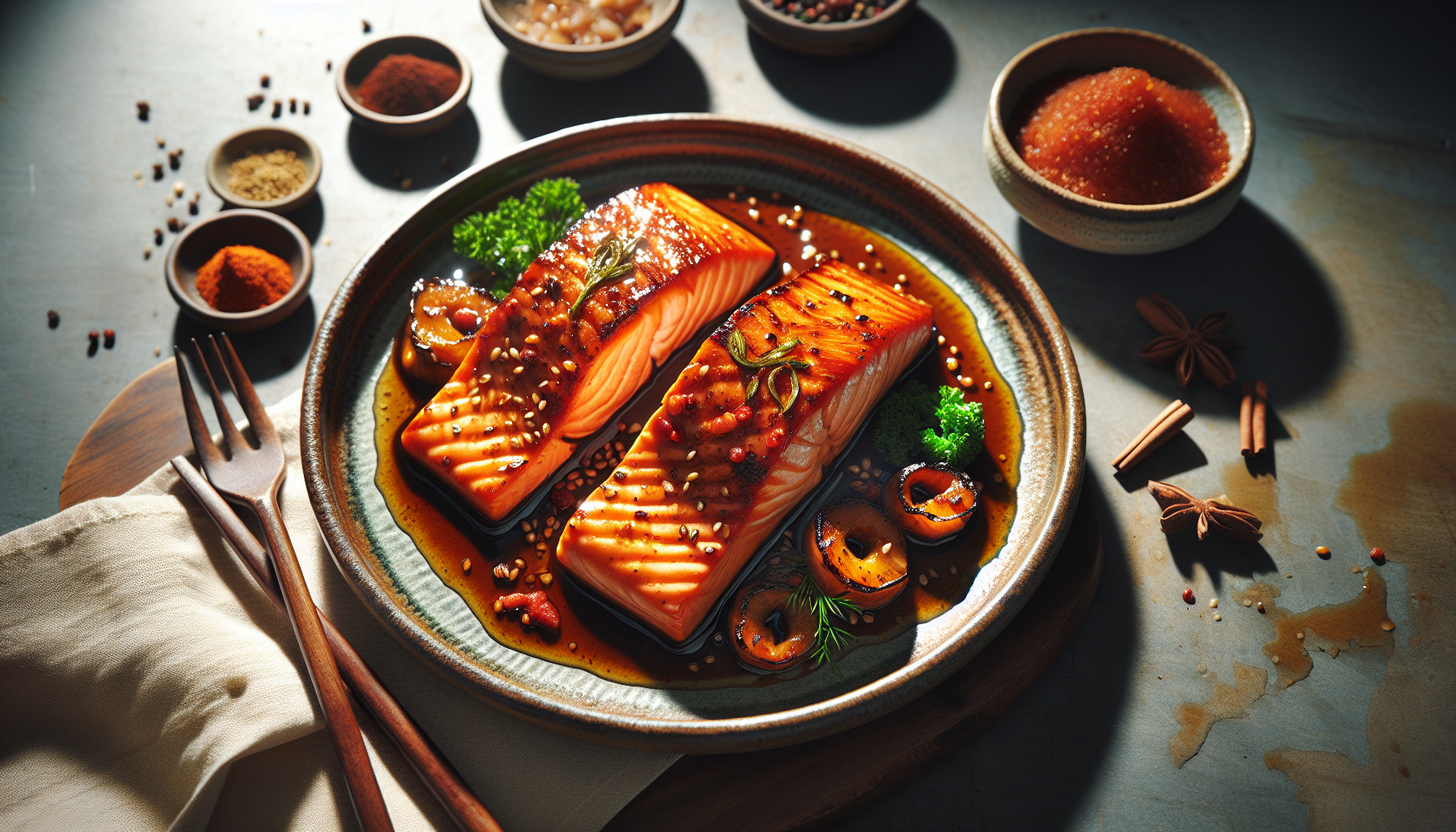
This salmon has been all over social media for a reason. The gochujang glaze caramelizes into a sticky, burnished crust that hits every note: sweet, spicy, salty, tangy. Twenty minutes, one pan, and you look like you tried way harder than you did.
Ingredients
- 4 salmon fillets (6 oz each), skin-on
- 3 tablespoons gochujang paste
- 2 tablespoons soy sauce
- 2 tablespoons honey
- 1 tablespoon rice vinegar
- 1 tablespoon sesame oil
- 3 cloves garlic, minced
- 1 tablespoon fresh ginger, grated
- 1 tablespoon vegetable oil
- Sesame seeds, for garnish
- Sliced scallions, for garnish
Step-by-Step Instructions
Step 1: Make the Glaze
Whisk the gochujang, soy sauce, honey, rice vinegar, sesame oil, garlic, and ginger in a bowl until smooth. Taste it. You should want to drink it. If you do, you nailed it.
Step 2: Sear the Salmon
Pat the fillets dry. This matters. Wet fish does not sear, it steams, and steamed salmon is sad salmon. Heat vegetable oil in a cast iron skillet over medium-high until it just starts to smoke. Lay the salmon skin-side up and leave it alone for 3 minutes.
Step 3: Glaze and Finish
Flip the fillets. Pour the glaze over and around the salmon. Drop the heat to medium. As the sauce bubbles and reduces, spoon it over the fish every minute or so. After 5-6 minutes, the glaze should be thick and lacquered, and the salmon should be just cooked through with a slightly translucent center.
Step 4: Garnish and Serve
Hit it with sesame seeds and sliced scallions. Serve straight from the skillet if you want to look cool (you do).
Serving Suggestions
- Over steamed jasmine rice with a drizzle of the extra pan sauce
- Next to quick-pickled cucumbers and a handful of fresh cilantro
- With roasted broccolini or sauteed bok choy
Tips
- Don’t skip patting the salmon dry. Moisture is the enemy of a good sear.
- If your glaze reduces too fast and starts burning, add a splash of water to loosen it up.
- Skin-on fillets hold together better in the pan, but skinless works too. Just be gentler when flipping.
- Leftovers (if there are any) flake beautifully over rice bowls the next day.